
Purpose
Guapamacátaro Art and Ecology was founded in 2006 by Alicia Marván, a Mexican-American artist and educator with a lineage tracing back to the first generations of progressive Mestizos in México. Over the past 18 years, our initiative has continuously sparked a transformative impact, establishing itself as a pioneer in the field of sustainable development.
Clay sculpture by Sofía Arredondo (MEX), AIR 2020.
At the heart of our programs is the intersection of art and ecology. This inquiry manifests by exploring, understanding, communicating and applying ecology through creative and interdisciplinary practices, beyond the preservation of “nature”. Biological factors are examined alongside the social, political and economic dimensions that make up the ecosystem at large.
With a strong focus on education, we have worked tirelessly to improve our community. The Hacienda functions as a platform for agency, equality, and the undoing of colonization, as well as a forum for a deeper understanding of the connection between nature, culture, and society.
Our programming challenges the site’s colonial legacy by providing a platform for underrepresented groups to be active members of a global community. We involve local people of all ages and demographics in an array of cultural activities: workshops, exhibitions, performances, screenings and opportunities to collaborate and share knowledge.
Context
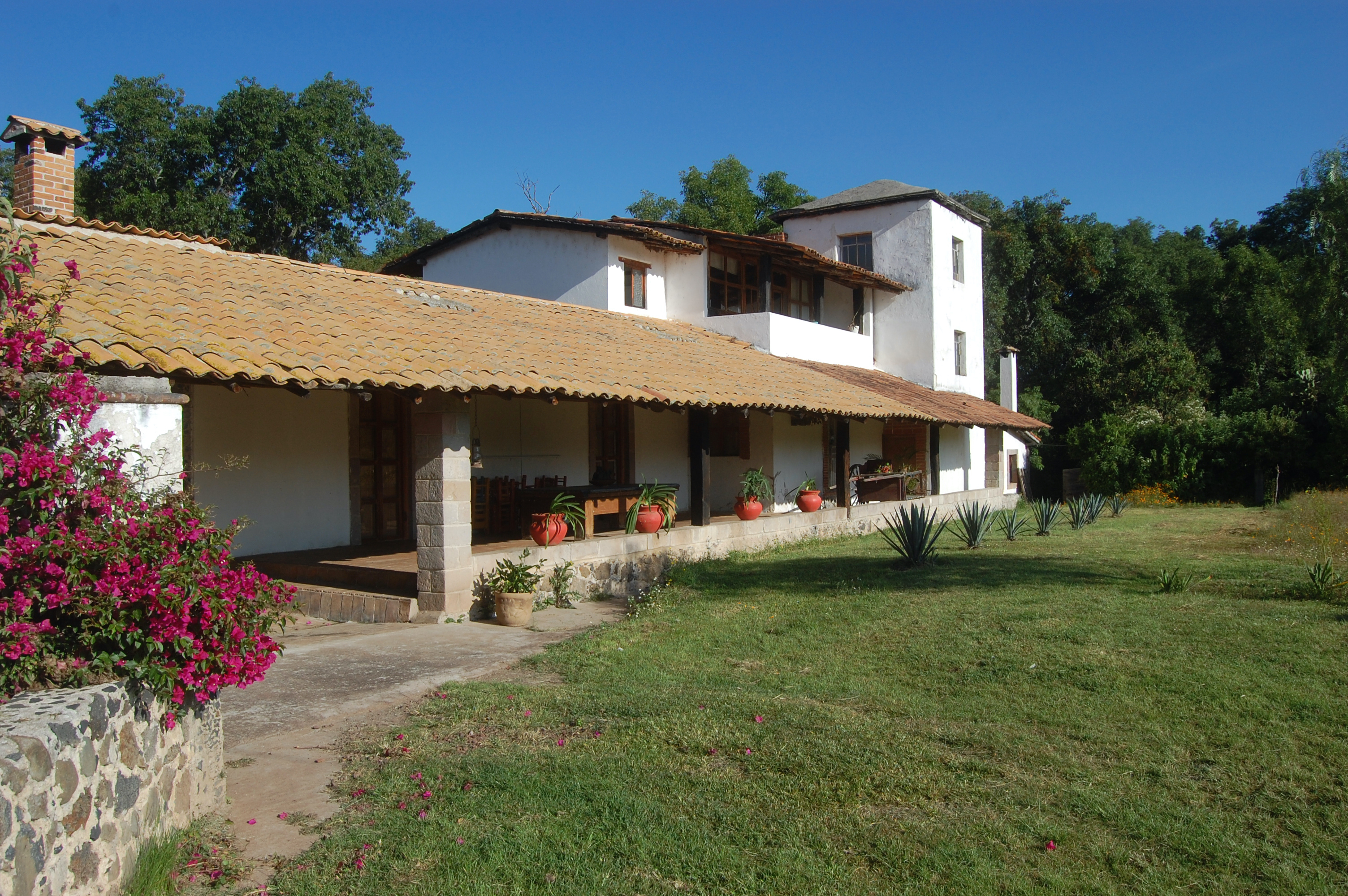
The Guapamacátaro Hacienda, established in the early 1600’s by Spanish settlers as an important agricultural producer of colonial Mexico, hosts our art and ecology programming.
Maravatío, the nearest town 6kms away, was once serviced by passenger train from Mexico City (two hours away by car now), and continues to be a humming trade post for producers of the region. Nearby mining towns of Tlalpujahua and El Oro boast a fascinating yet harsh industrial past, where early twentieth century capitalists such as Rockefeller and Guggenheim made part of their fortune.
Severely affected by the Mexican Revolution in 1910, and the collapse of the mining industry a few decades later, the Hacienda ceased agricultural production yet remained a cultural beacon through activities at a church and a school built for the community in the 1950’s.

Relevance
Like many areas in rural Mexico, Guapamacátaro lacks cultural opportunities. This is due to a number of reasons, primarily the priority to fulfill basic needs. Additionally, economic migration, globalization and deficient support by the public and private sectors has turned rural areas into economic deserts.
Performance by Hazel Batrezchavez (MEX/USA), AIR 2019
Consequently, the population deals with wider issues including alcoholism, domestic violence, gender inequality and learning difficulties. A parallel problem is the increasing ecological degradation that the area and others like it face due to limited education and the short-term thinking of economic progress. Our programs address these pressing issues through participatory learning, community organizing and forging connections between the local and the global.
The impact of our 18-year journey is far-reaching. Projects from numerous artists in residence have sparked inspiration in countless people, giving them the confidence to make a difference in their communities. From thought-provoking art installations to hands-on workshops that promote ecological awareness, this initiative consistently shows the significant influence of culture and education in building a better future.
Guapamacátaro Art & Ecology
Guapamacátaro Hacienda
Maravatío, Michoacán MEXICO
 Guapamacátaro Art & Ecology